
Real-Time Monitoring in Well Cementing: Improving Visibility During Critical Operations
Cement sheath failure in injection wells remains one of the oil and gas industry’s most costly and persistent well integrity risks. It’s not a new challenge—but it is becoming more severe. As mature fields transition into EOR programs and CO₂ storage expands, the conditions cement was originally designed to withstand are no longer the conditions it faces downhole.
CEMPRO Live New Release Announcement
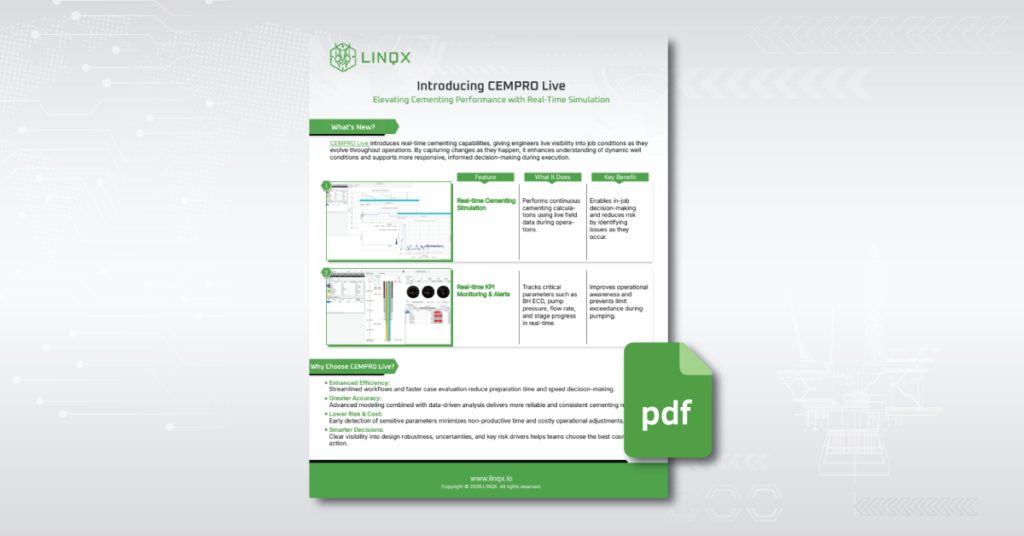
CEMPRO Live extends CEMPRO with real-time cementing capabilities, connecting engineering models with live field data during operations. Engineers can monitor changing well conditions, perform continuous cementing calculations, and track critical job parameters as they evolve—supporting more informed decision-making, improving operational visibility, and helping identify potential issue
The Integrity Risk Operators Can’t Ignore in CCUS and EOR Wells
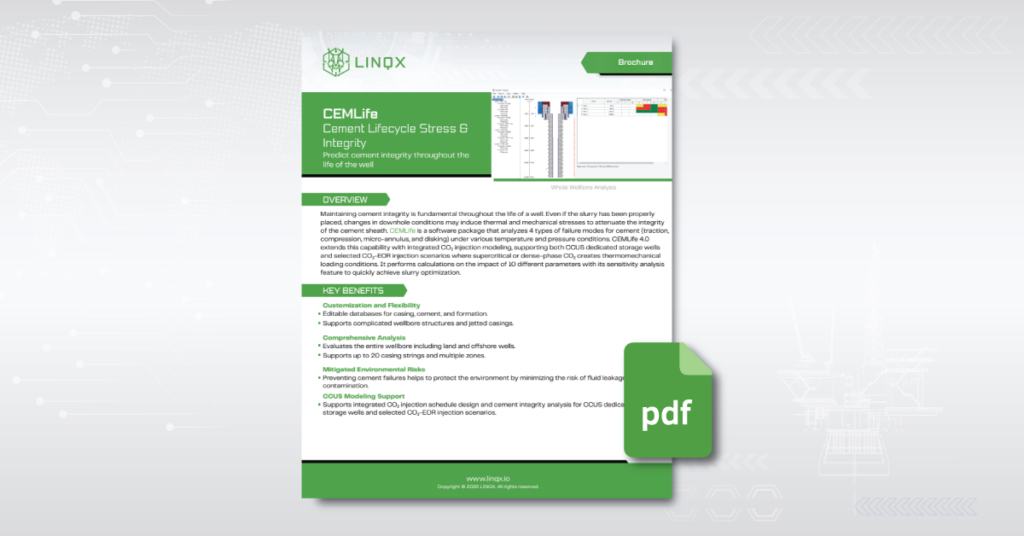
Cement sheath failure in injection wells remains one of the oil and gas industry’s most costly and persistent well integrity risks. It’s not a new challenge—but it is becoming more severe. As mature fields transition into EOR programs and CO₂ storage expands, the conditions cement was originally designed to withstand are no longer the conditions it faces downhole.
CEMLife 4.0 New Release Announcement
FracPro Live+ introduces a suite of powerful tools designed to streamline fracture engineering, quickly visualize wellbore schematics, animate fluid movement in real time, analyze entry friction, automate step-down evaluations, and collaborate seamlessly with multiple users—all within a cloud-based platform.
FracPro Live+ New Release Announcement
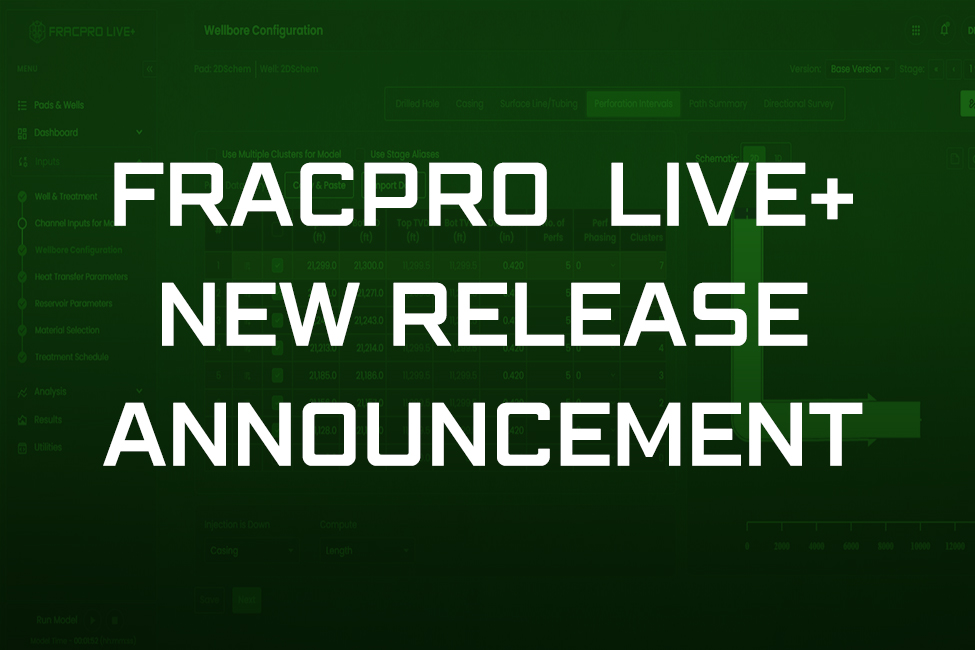
FracPro Live+ introduces a suite of powerful tools designed to streamline fracture engineering, quickly visualize wellbore schematics, animate fluid movement in real time, analyze entry friction, automate step-down evaluations, and collaborate seamlessly with multiple users—all within a cloud-based platform.
FracPro 2026 10.15.8 New Release Announcement
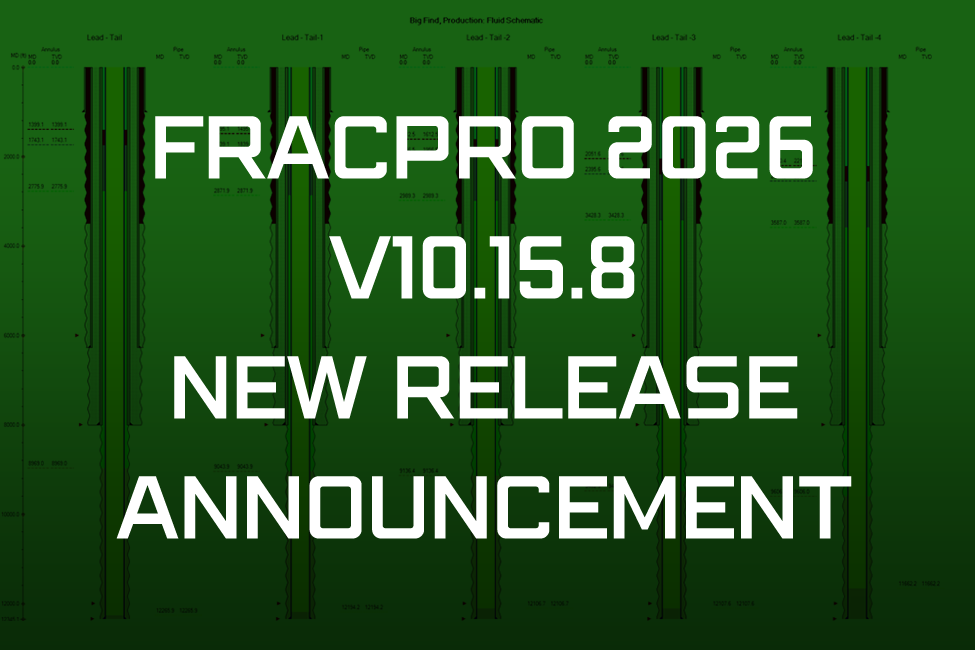
FracPro 2026 (v10.15.6) brings powerful sensitivity analysis for unconventional reservoirs, an expanded coiled tubing
library, improved multistage report summaries, enhanced plotting with min/max scales, auto time-scaling, and custom logo support—giving engineers faster insights and clearer fracture design visualization.
Precision Matrix Acidizing: From Planning to Post-Job Performance

Hydraulic fracturing is a complex, highly variable process. No two formations behave exactly the same, and a fluid that works well in one stage can underperform in another. Choosing the right frac fluid is about more than viscosity—it’s about understanding formation characteristics, fluid properties, additives, and operational goals.
This guide breaks down the fundamentals of fluid selection, highlights trade-offs, shares lessons from field trials, and provides a practical checklist for engineers.
From Fragmented Reports to Fluid Design: How Cement Labs Are Solving the Data Consistency Problem
Hydraulic fracturing is a complex, highly variable process. No two formations behave exactly the same, and a fluid that works well in one stage can underperform in another. Choosing the right frac fluid is about more than viscosity—it’s about understanding formation characteristics, fluid properties, additives, and operational goals.
This guide breaks down the fundamentals of fluid selection, highlights trade-offs, shares lessons from field trials, and provides a practical checklist for engineers.
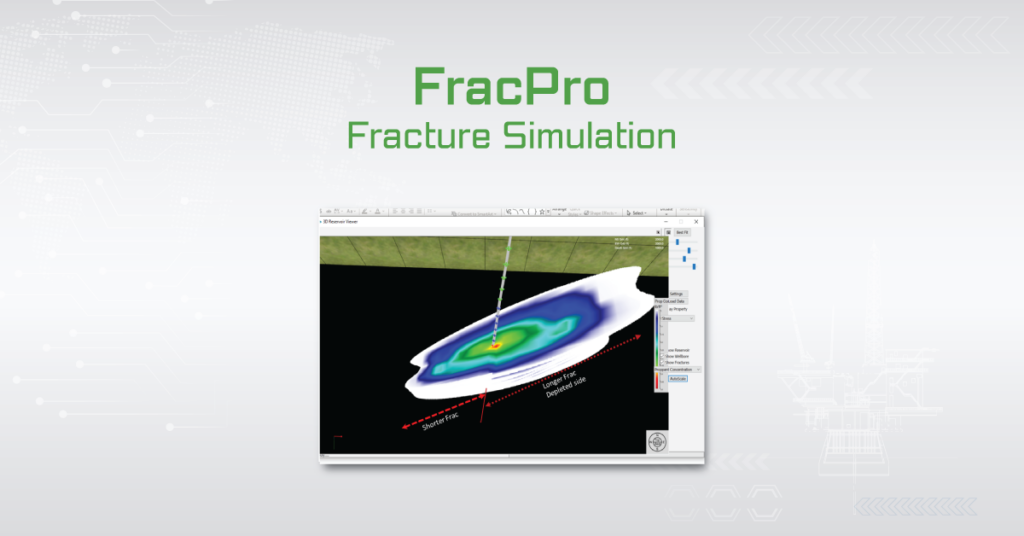
Frac Fluids 101: Matching Properties, Additives, and Objectives to Your Formation
Hydraulic fracturing is a complex, highly variable process. No two formations behave exactly the same, and a fluid that works well in one stage can underperform in another. Choosing the right frac fluid is about more than viscosity—it’s about understanding formation characteristics, fluid properties, additives, and operational goals.
This guide breaks down the fundamentals of fluid selection, highlights trade-offs, shares lessons from field trials, and provides a practical checklist for engineers.
Optimizing Cementing Operations Through Data-Driven Insights

As directional drilling pushes into deeper, more complex territory, the mechanical forces acting on drillstrings and casing systems grow harder to ignore. Extended-reach and high-angle wells introduce interactions that are neither linear nor forgiving. Among these, torque and drag (T&D) stand out—not as theoretical challenges, but as real constraints that can derail operations if not properly addressed.